We all do things that aren’t particularly helpful or healthy. For brevity and bluntness, let’s 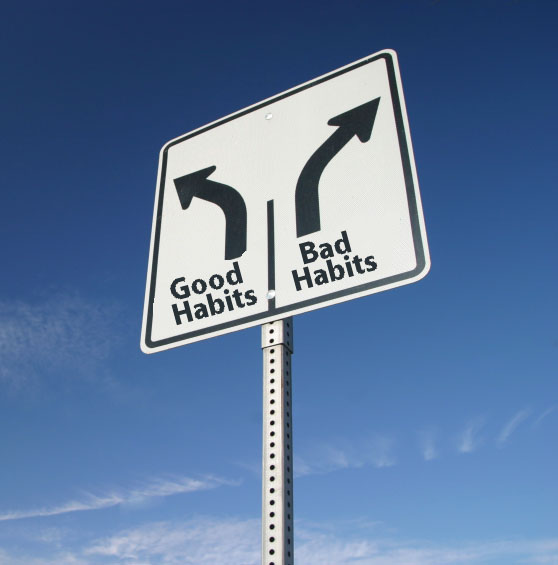 call them “bad habits“. Maybe we gossip or overspend or wallow in negative thoughts. Perhaps we oversnack or waste hours surfing the internet. Or maybe that’s just me. What are your vices? What habits do you have that aren’t particularly healthy or helpful? What one habit would you most like to cease? (If in doubt, pick the activity you’re most embarrassed about).
Here’s how to overcome your ‘bad habit’:
1. Commit to make a change
Resolve to reduce or eliminate this unwanted behavior. Until you decide you really want to change, it’s pretty much impossible to overcome an unhealthy or bad habit.
2. Choose a specific goal
Be very clear about what it is you do want. Rather than saying “I’d like to watch less television”, it’s more helpful to be more concrete and specific. For example: “I intend to watch a maximum of seven hours of TV per week” or “I intend to keep the TV off all day until after dinner” or “No TV during meals” or ‘I hereby declare Friday as TV-free days” or whatever it is you want to achieve.
3. Make a list of the benefits of changing
What will be the consequences of curtailing your bad habit? Make a list. Review this list at least once a day, every day. Refer to this list if you’re tempted to indulge in your unwanted behavior.
4. List the costs of not changing
Research the negatives, so you have vivid images to bolster what you’re trying to do. Again, it’s helpful to make a list of the consequences of your bad habit and to review it intermittently.
5. Find support
Tell supportive friends and family members about the change you are implementing. Who can you truly trust to support you? Ask them for help. Be specific.
Are there particular people you can contact when you feel cravings?
Is there a coach or a mentor who can guide you through the process of overcoming your bad habit?
Are there support groups available you could join? It’s very, very helpful to connect with other people going through the same challenges.
Is there someone with whom you could partner up to make the change? Either someone going through the same transition (e.g. you’re both committed to stop smoking) or someone going through their own change (e.g. you’re cutting down on internet surfing while they are cutting down their junk food intake)?
6. Remove temptation
Find ways to make it easy on yourself. Physically remove items that trigger, facilitate or enable your bad behavior from your environment. For example, if you’re dieting, remove unhealthy and ‘trigger’ foods from your home. If you’re determined to reduce your internet surfing, turn your connection off as much as possible.
Decline invitations where you can’t honor your commitment. For example, if you’ve decided to lay off the booze, avoid parties, bars and social events where you know you’ll be tempted to indulge.
7. Choose a course of action
Option (a): Cold Turkey
Simply cease your bad habit.
Think about how you’d rather be operating. (For example, let’s say you’d like to avoid snacking between meals). Establish a clear picture of the behavioral pattern you’d prefer and commit yourself to those actions. (For example, choose standard meal times and avoid eating except at those times).
Option (b): Join an Established Program – and Follow it
Whether it’s WeightWatchers or a 12 Step Program, there may well be a comprehensive program devoted to curtailing your target bad habit. This may involve group meetings plus daily activities including reading, journaling and making a phone commitment to a specific person.
Option (c): Create your Own Personal Program
Decide exactly what you want to do (and not do). What daily activities will keep you on track? (e.g. inspirational reading, journaling, reviewing your costs and benefits lists, checking in with a supportive person, etc.). To whom can you make yourself accountable? (e.g. a coach, friend or habit-busting buddy)
Option (d): Wean Yourself via Baby Steps
Begin by measuring and monitoring your normal behavior for a week.
On the following week, keep measuring and monitoring…but this time, impose a limit of 10% less than you did last week. If you are successful for the week, then further reduce your negative activity by another 10 %…and so on until you achieve your ideal activity level.
8. Monitor and reward your progress
However you proceed, it’s important to chronicle your progress and to reward yourself for every day following your game plan.
Recognize that each day you succeed will make future successful days easily and more likely.
Reward yourself for milestones – especially your first day, first week and first month.
9. Forgive yourself for setbacks.
If you revert back to your old ways, forgive yourself and get right back on track. You’re human i.e. imperfect. Do the best you can and carry on.
If you get really stuck, ask yourself, what’s really going on here? Dig deeper. What unhealthy, unhelpful beliefs are interfering with your goals?
10. Focus on the big picture.
Look at the overall pattern of progress, rather than focusing on any specific day. “Well, I didn’t do so well today but I stayed on track for the rest of the week…and I’m doing much better this week than last week.”
*****
Activity: What habits do you have that aren’t particularly healthy or helpful?
Activity: Pick unhealthy/unhelpful behavior. (If in doubt, pick the one you’re most embarrassed about).
__________________________________________________________________________
What would be the benefits of changing?
__________________________________________________________________________
__________________________________________________________________________
__________________________________________________________________________
__________________________________________________________________________
__________________________________________________________________________
What are the costs of not changing?
__________________________________________________________________________
__________________________________________________________________________
__________________________________________________________________________
__________________________________________________________________________
__________________________________________________________________________
Activity: Would you really like to change this behavior? If so, follow the ten steps above.
*****
Want to re-publish this article? Go for it – just include the author’s name, a link to this original post and the following text blurb:
Are you struggling with too many talents, skills, ideas? You may have The DaVinci Dilemma™! Find tools, fun quizzes, coaching, inspiration and solutions for multi-talented people at http://www.davincidilemma.com/ .